breakfast
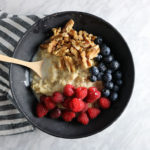
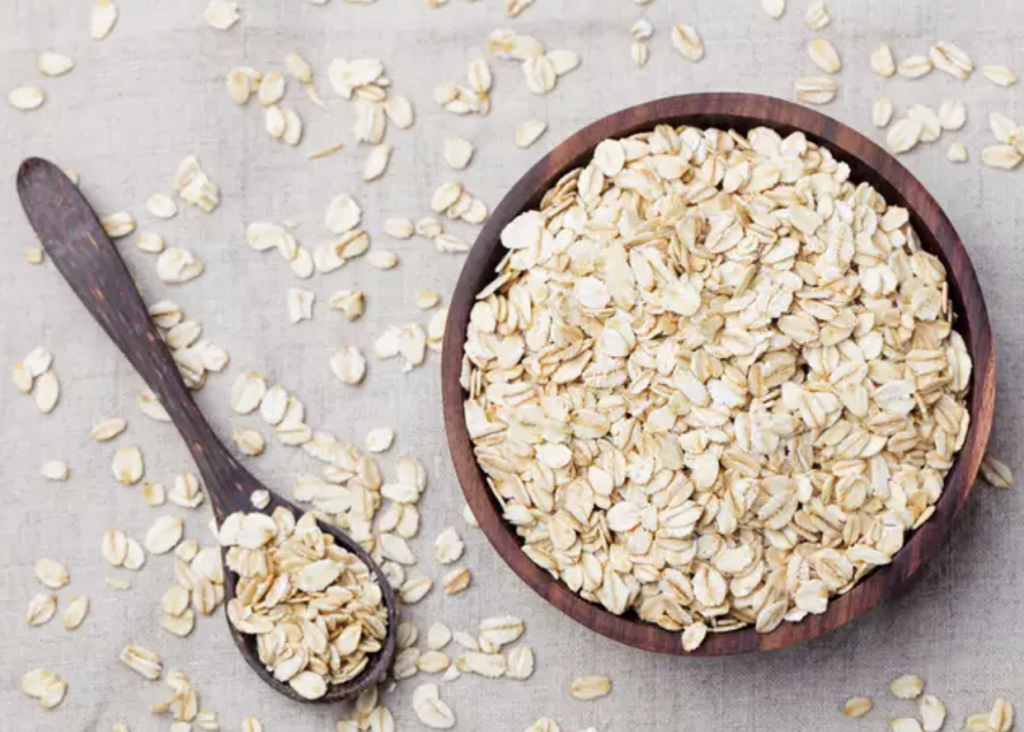
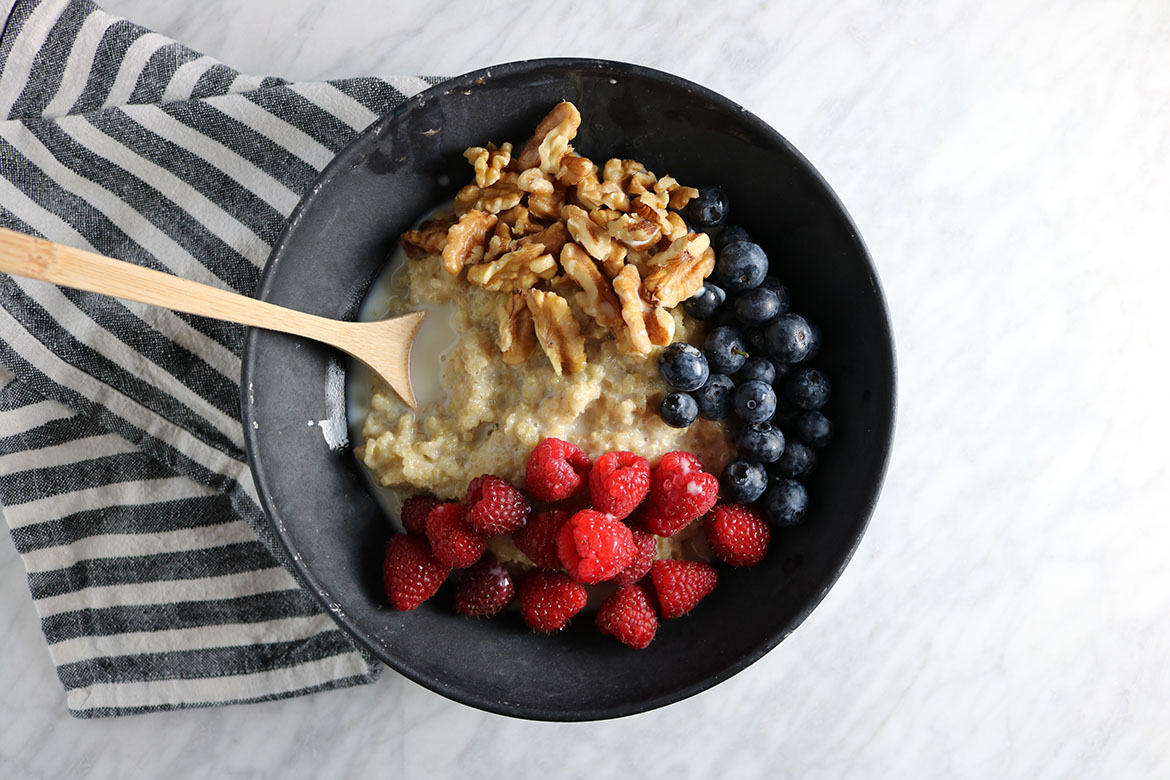
 Quinoa Oat Porridge
Ingredients
- 1/3 cup quinoa
- 1/3 cup rolled oats
- 2 cups water
- Pinch of sea salt
- 1/4 tsp of cinnamon
toppings:
- your favorite berries
- chopped raw walnuts
- unsweetened almond milk
- cinnamon optional
Instructions
-
In a small pot, put quinoa, rolled oats, water, sea salt and cinnamon. Bring to a boil. Reduce heat to low and simmer covered for 20 minutes, stirring occasionally.
-
Top with berries, raw walnuts and unsweetened almond milk. Add more cinnamon if desired.
Recipe Notes
Save one portion for breakfast while you're testing for toxic triggers after the Program or share with another family member!
lunch
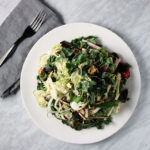
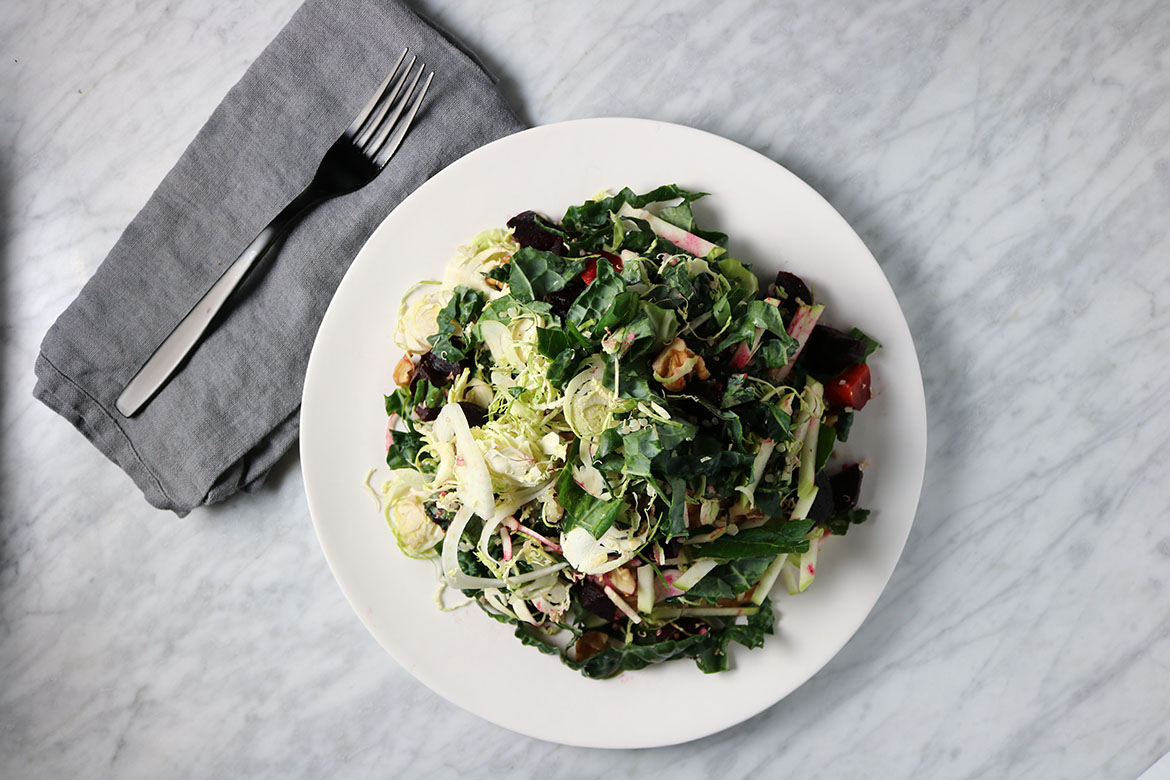
Winter Quinoa Salad
Ingredients
- 1 roasted beet cut into bite-sized pieces
- large handful shaved Brussels sprouts
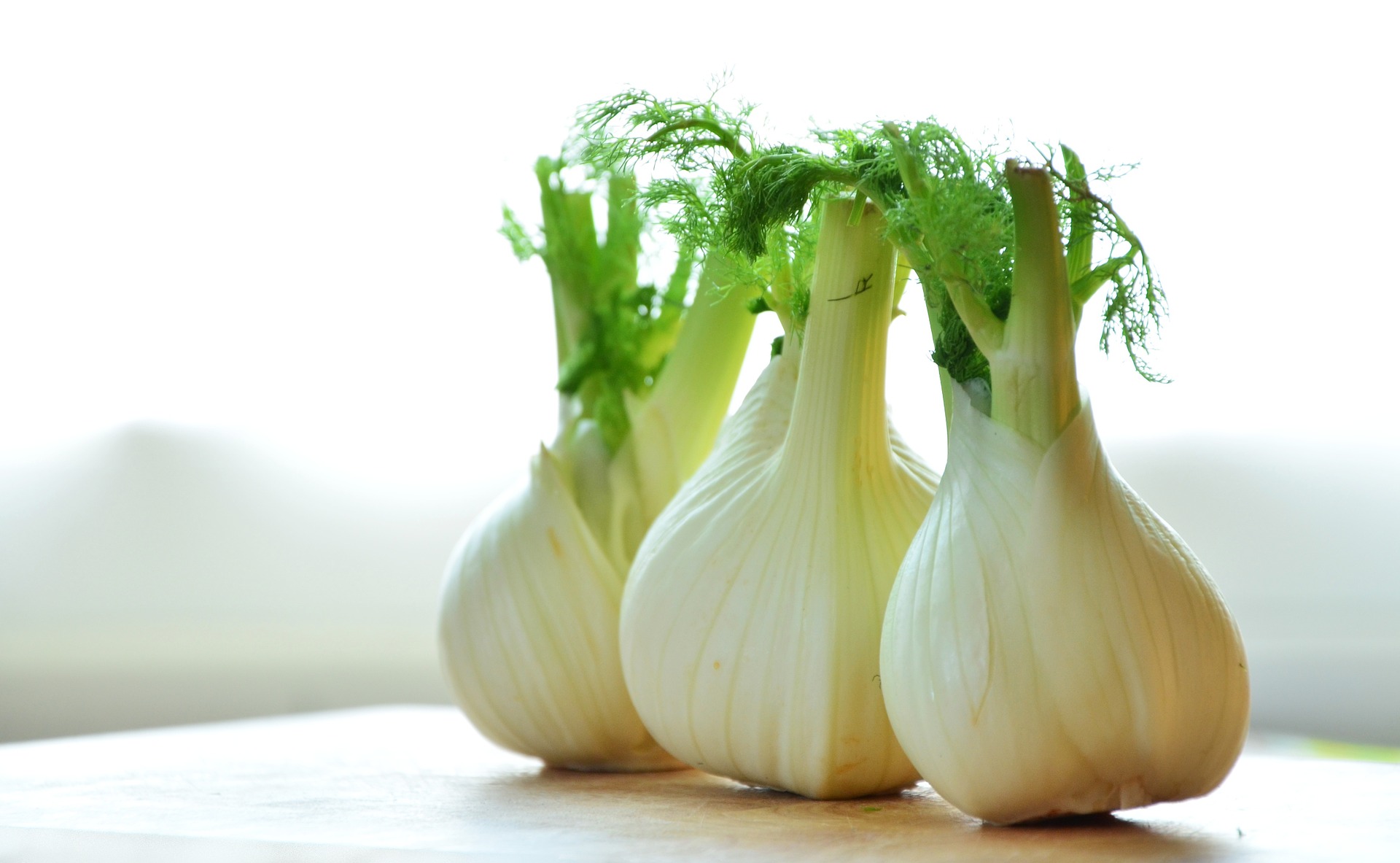
- 1/4 fennel bulb sliced thinly
- ½ apple julienned
- ¼ cup raw walnuts chopped coarsely or broken in half
- 1/3 can chickpeas
- 2 leaves lacinato kale stemmed & chopped
- 1/3 of the roasted sweet potatoes
- 1/4 cup cooked quinoa
- poppy seed dressing
Instructions
-
Assemble salad by combining all ingredients. Toss with dressing, to taste.
Recipe Notes
Reserve remaining 1/3 can chickpeas for Dinner Day 14.
dinner
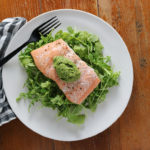
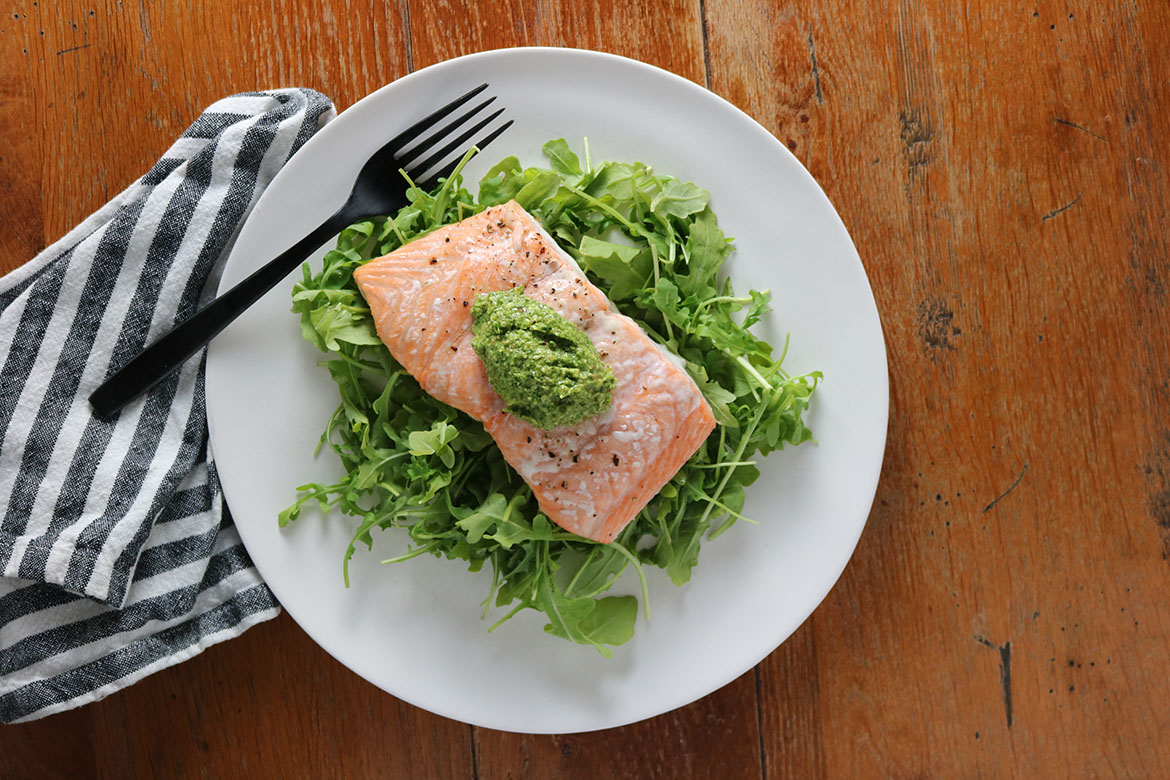
Wild Salmon
Ingredients
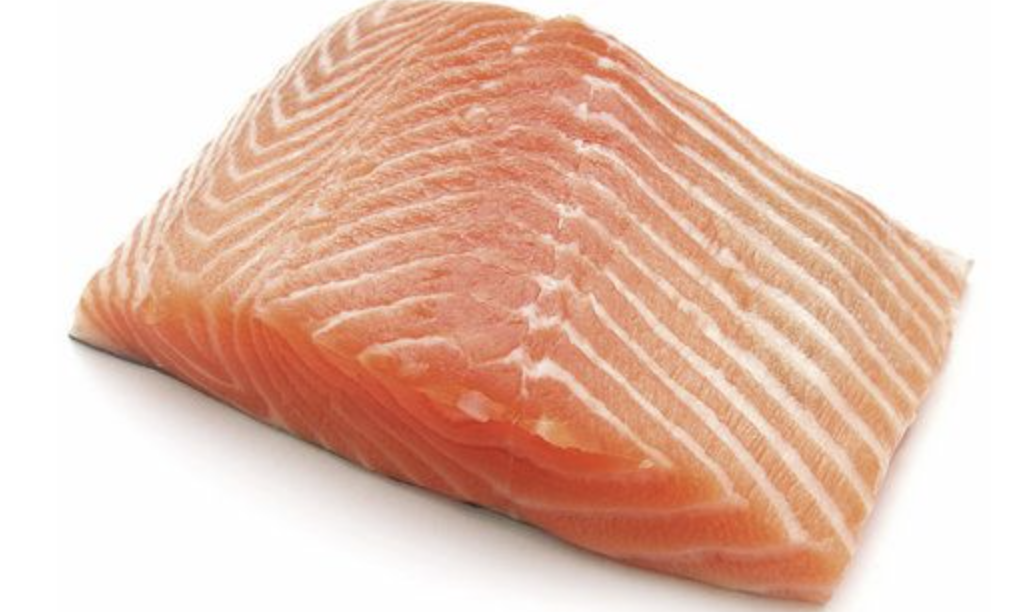
- 3/4 lb wild salmon
- sea salt and pepper to taste
- 1/4 fennel sliced thinly
- drizzle of avocado oil
- vegan pesto
- large handful of arugula
Instructions
-
Preheat oven to 400 degrees F.
-
Rinse and dry salmon well. Place in a baking dish. Season with sea salt and pepper, to taste. Top with sliced fennel. Drizzle avocado oil on top. Bake until done, usually around 15-20 minutes.
-
On a plate, put arugula and salmon. Top salmon with vegan pesto.
Recipe Notes
Save one portion of the salmon for Lunch Day Fourteen.
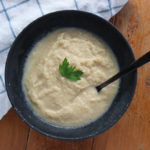
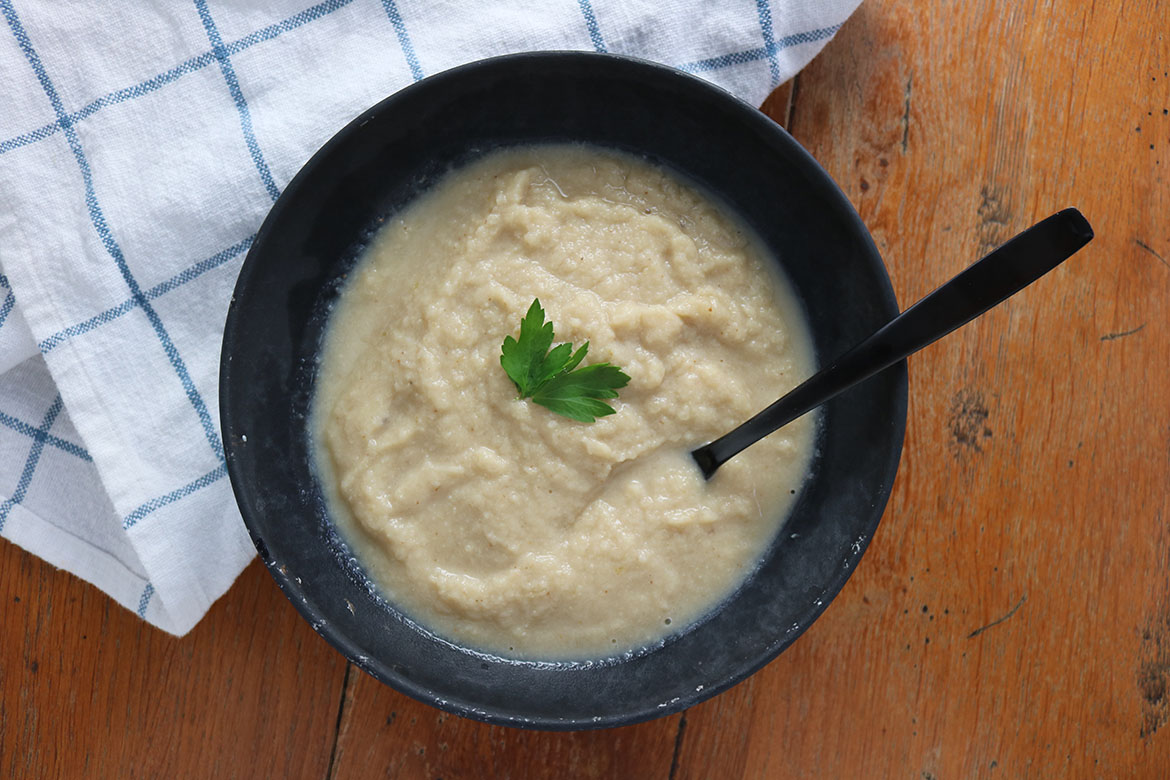
Roasted Cauliflower Fennel Soup
Ingredients
- 1/2 Tbsp avocado oil
- 1/2 onion diced
- 1/2 fennel bulb sliced
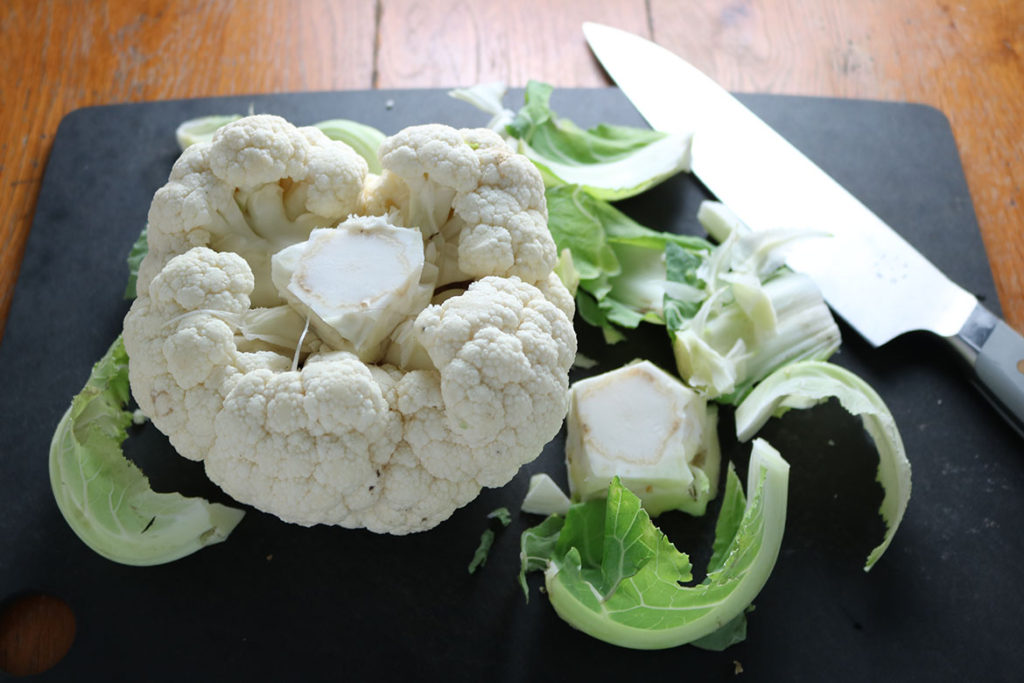
- 1/2 head roasted cauliflower
- 1 clove garlic chopped
- 2 cups vegetable or bone broth
- sea salt and pepper to taste
Instructions
-
In a pot, heat avocado oil over medium heat. Add onion and garlic and cook until soft and beginning to brown, approximately 6 minutes. Add cauliflower, fennel and broth. Bring to a boil, then lower heat to low, cover and simmer for 10 minutes until vegetables are cooked and soft. Add sea salt and pepper, to taste.
-
Using an immersion blender, blend soup until smooth. Alternatively, carefully put hot soup into a blender and blend until smooth.
Recipe Notes
Save one portion for Day Fourteen Dinner.